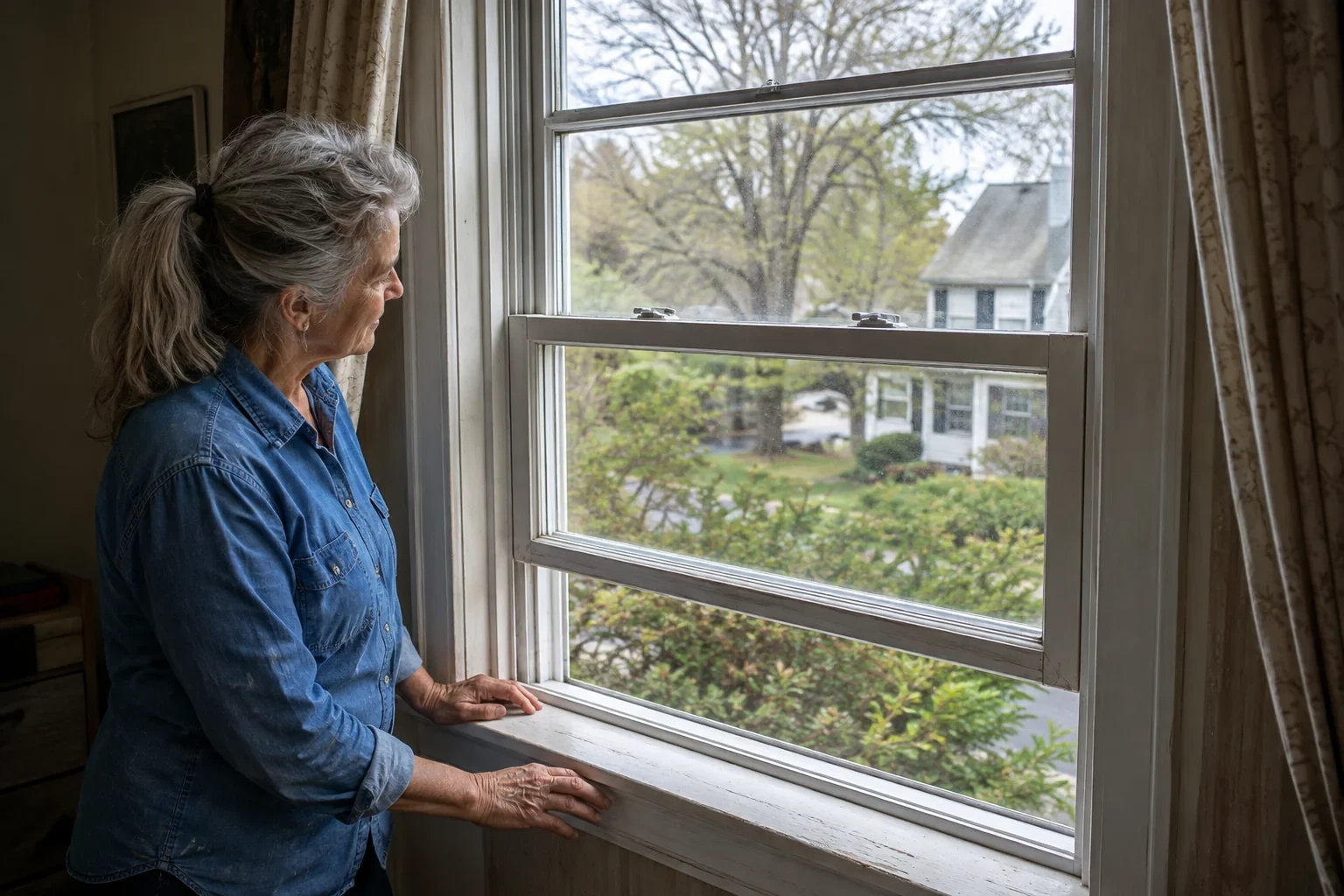
The symptom
The top and bottom panels rattle, drift out of place, and leave a draft where they meet in the middle.
The proposed method
Clarify whether the proposal replaces the sashes, installs an insert or removes the complete frame. Ask which balances, locks and other hardware are included and whether any existing components remain. Agree on the finishing scope and a completion check covering the operation of both sashes and the selected tilt features, where fitted.
Items to discuss
double-hung frame, upper sash, lower sash, balances, meeting-rail lock, weather seals, installation trim. Clarify which parts or materials would be supplied, which tools would be used, and what documentation is included.
Property context in Chinatown
The area rebuilt on its original site after 1906, and some buildings reused original brick; its historic fabric includes many early post-earthquake structures.
Source for building history ↗The Chinatown Area Plan describes predominantly low, small-scale buildings, with many buildings relatively short in depth because of the lot pattern. This describes the district’s built form, not the equipment or condition of an individual property.
Source for housing context ↗The City identifies Chinatown as comparatively sunny and sheltered from wind, rather than treating it as a typical fog-exposed district.
Source for local exposure ↗The plan records more than 250 historically or architecturally important early post-earthquake buildings, so preservation-sensitive work is a realistic consideration.
Source for local context ↗San Francisco's Department of Building Inspection publishes step-by-step instructions for over-the-counter permits covering doors, windows, reroofing and other common exterior residential projects. The page lists in-kind window replacement and in-kind exterior door replacement, at the same size and location, among the projects eligible for over-the-counter review through the PermitSF portal, and separately says that new windows or exterior doors in new locations are among the projects that need plans. Read it before agreeing a scope, and confirm the address, the opening and the review route with the department. It does not decide eligibility, timing or requirements for an individual property.
Source for planning your work ↗Area-wide context is not a finding about your own property.
What shapes the quote?
The component being changed
Glass-only, hardware-only and complete-frame work involve different materials and labor. Compare proposals for the same work.
Access and concealed condition
Opening size, access, finishes and damage discovered during removal can change the work. Agree how any change will be documented.
The complete proposal
Clarify removal, disposal, weatherproofing, finish restoration and completion checks before comparing totals.
Ask for a written quote and confirm the complete charge before work begins.
Before the visit
A little preparation helps.
0 of 3 details ready